Showing posts with label Fascia. Show all posts

Monday, November 22, 2021

18 Parts of a Roof and What They Do

Numerous residential roofing components work together to fully protect a home

Without knowing the basic components when having your roof repaired or replaced, an unscrupulous roofer can take advantage and charge you more money than necessary. Knowing the various parts that compose a roofing system will help you understand the work being done, and ensure you are treated fairly.

atlantacommercialroofingcontractors.com gathered the following information to help you gain a deeper understanding of the complexity and needed parts of your home’s roofing system.

Parts of a Roof

The following are 18 parts of a shingle roofing system and their purpose:

1 – Ridge Board

This is the wooden or metal board that runs along the peak of the roof. Rafters and trusses connect to the ridge board, creating a cohesive framework for the roof.

2 – Collar Beam

A collar beam is a horizontal beam that connects two rafters that intersect at the ridge.

3 – Solid Decking

This decking is composed of solid materials, is strong and stable for bearing potentially heavy loads.

4 – Rafter
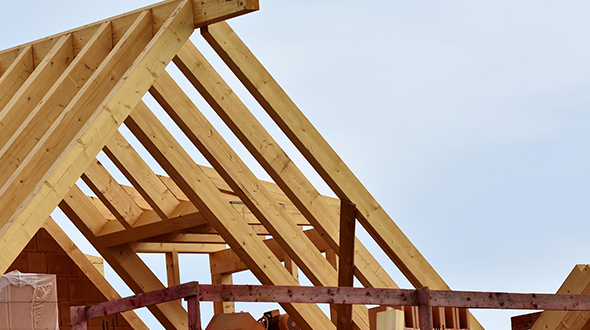
Rafters connect to the ridge board and support the roof deck and its load

One of the multiple diagonal members of the truss that meet at the apex to support the roof deck and its load.

5 – Felt Underlayment

This layer of material is a waterproofing layer made of regular felt. It is stacked above the solid decking board and then covered by shingles or preferred roofing materials.

6 – Shingles

Shingles are the roof covering typically flat and cut or molded into rectangular shapes. Shingles can be made of multiple materials like slate, wood, stone, plastic, metal, and composite materials.

Suppliers can offer shingles in a wide variety of shapes, sizes, and colors.

7 – Chimney
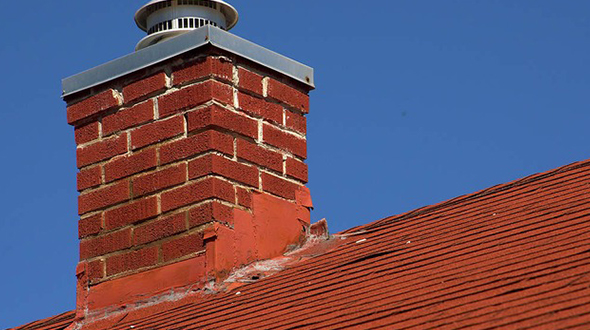
A chimney and its flashing work together to remove dangerous gases from your home and prevent leaks from rainwater

The vertical structure penetrating through the roof that is responsible for safely ventilating smoke and combustion or residual gases from a fireplace, boiler, or stove (wood-burning or gas equipped) to the outside environment.

8 – Chimney Flashing

A waterproofing seal installed at the penetration point of the chimney through the roof and used to prevent moisture infiltration.

A small structure called a cricket may also be installed on the raised side of the chimney to prevent moisture and debris from gathering and damaging the roof or chimney.

9 – Vent Pipe Flashing

This installation is weaved or layered into the shingle pattern preventing damage from water seepage into the roofing system.

10 – Spaced Sheathing

Spaced sheathing, also called skipped decking, refers to the type of decking identified by boards running horizontal to the rafters with a 4”- 6” space between them.

11 – Valley Underlayment

This waterproofing layer protects roof valleys from ice and water damage.

12 – Valley Flashing

Valley flashing is a waterproofing seal installed along valley lines.

13 – Lookout

A lookout, lookout rafter, or roof outlooker is a joist that extends in cantilever out from the exterior wall (or wall plate) of a structure, supporting the roof sheathing and providing a nailing surface for fascia boards. When not exposed, it can serve to fasten the finish materials of the eaves.

14 – Fascia

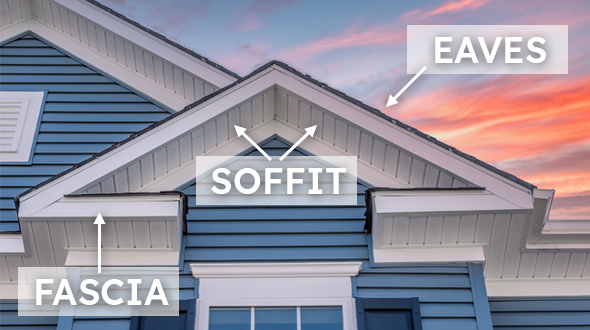
The fascia is the often attractive board along the side of the overhang and the roof that helps your roof have a completed appearance. Your gutters will sit atop your facia board. The fascia is sometimes called a “transition trim” between the home and the roofline.

15 – Rake

A rake board covers the top edge of siding where it meets the roof or soffit if there is an overhang on the gable end. A rake prevents rain from running behind it.

16 – Gutter
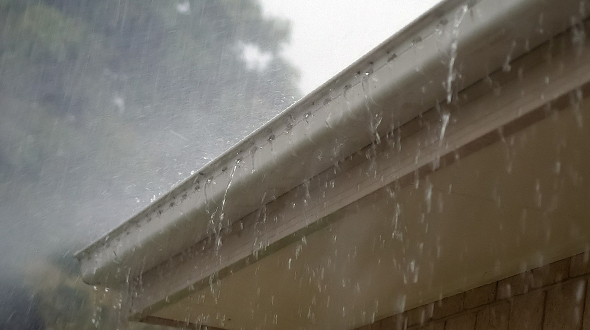
Gutters channel rain and melting snow away from the roof and building.

Gutters are the horizontal metal (typically aluminum) part of the water drainage system that are usually installed along the eave edges of your roofing system, or along roof features like dormers. Gutters are open at the top to collect rainwater flowing off the roof, then directing it into the downspouts.

17 – Down Spout

The primary job of gutters and downspouts is to collect water from the roofing system during rainstorms (or from melting snow) and safely divert it away from the foundation of the structure.

18 – Splash Block

Splash blocks are rectangular pieces of plastic or concrete located beneath the end of downspouts. Splash blocks are used to direct water as far away from a structure as possible while preventing soil erosion, eventually causing foundation issues.

While there are many more components that compose a roofing system, knowing the 18 listed above will give you sufficient dialog to properly address and negotiate eventual roof repairs or replacement.

Understanding What Makes a Roof

In this article, you discovered 18 roofing components that are fundamental to the proper functioning of a sloped, shingle roofing system.

The ability to address your roofing system issues directly with your roofer in clear and concise vocabulary will help you get the work done that you need.

Not knowing how to communicate your roofing system issues clearly can result in expensive, unneeded repairs, compounding existing problems, or the risk of being taken advantage of and overspending.

Sources:
goconstruct.org/why-choose-construction/whats-happening-in-construction/what-are-the-different-parts-of-a-roof-and-what-do-they-do/
checkbook.org/v2/docs/roofers/all-areas-roofers-parts-of-a-roof.pdf
asphaltroofing.org/asphalt-roofing-systems-components/

The post 18 Parts of a Roof and What They Do appeared first on atlantacommercialroofingcontractors.com

Wednesday, May 26, 2021

What Is a Soffit – Why You Need It

Soffit fascia and eaves work together to ventilate and protect the attic space under a sloped roofing system

A soffit is a critical component to prevent decay and eventual roof failure due to excess moisture accumulating in your attic. Discover what else your soffit does to help your roofing system meet its intended life expectancy.

atlantacommercialroofingcontractors.com gathered the following information about what a soffit is, its purpose, and why it is essential to your roofing system’s success.

What Is a Soffit?

When a sloped roof descends from the peak to the exterior walls of a structure, the roof will overhang the structure by 1 to 2 feet. Where you have tiles, shingles, or metal roofing on the topside, the soffit is the component underneath the overhang that protects the rafters, attic space, and roof substrate or decking from excess moisture, severe weather infiltration, potential mold growth and helps your roofing system last for the duration of its intended lifespan.

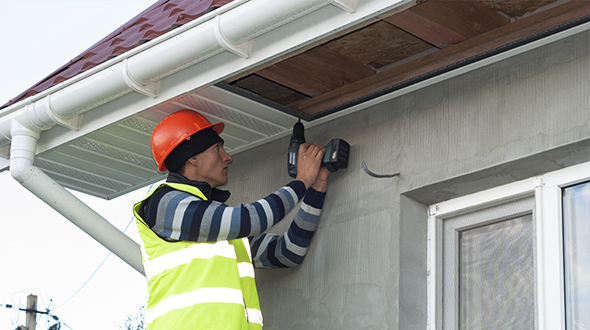
Soffit installation and repair work

What Is The Difference Between Soffits and Fascia?

Soffits and fascia are installed together, forming a barrier between external elements and the attic space created by your sloping roofing system. Looking at a structure at street level, you may say the trim around the foot of the roof looks well-done. This “trim” is the fascia. With the soffit underneath the overhang and the fascia closing the gap between the soffit and the roof, the barrier, as mentioned earlier, is formed. These roofing components:

  • Deter bee, hornet, and other insect infestations
  • Stop wildlife (squirrels, raccoons, cats, etc.) from nesting in your attic
  • Prevent water (wind-driven rain) from getting in your attic
  • Keep your attic ventilated, preventing a buildup of moist/humid air that could lead to mold, mildew, and rotting problems
  • Prevent premature aging of your roofing system

Soffits and fascia, when well-installed, can add to the visual “completeness” of the structure. Thus, adding curb appeal and potentially increasing the property’s overall value.

Note: Gutter systems installed around the foot of a sloped roofing system are typically affixed to the fascia. This is done in a manner that guides water runoff away from the roofing system, doorways, windows, and other vulnerable areas.

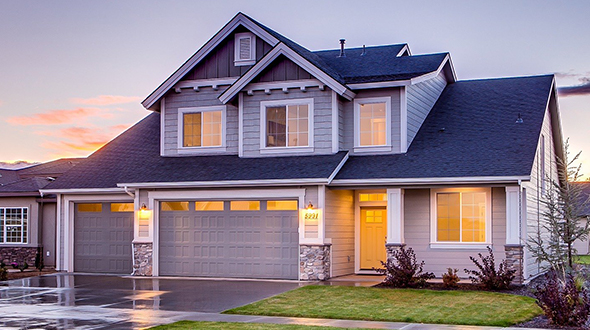
Soffit and fascia along a home with gutters and curb appeal

Soffit and Fascia Materials

To complement the construction of your home or type of roofing system, you can find soffit panels and fascia boards made from many different materials and finished in a wide variety of colors and textures.

Soffits and fascia are typically made from materials like:

Aluminum – Lasts 20+ years with colors and texture baked in to prevent fading.
Wood – Depending on the wood and maintenance, lasts 5 to 15 years.
UPVC (Unplasticised Polyvinyl Chloride) – Lasts 10 to 20 years and comes in multiple colors and textures but may fade or become brittle over time.
Vinyl – Similar to uPVC, lasts 10 to 20 years, is available in multiple colors and textures, and can become faded and/or brittle over time.
Steel – Lasts 25+ years with multiple colors and textures that resist fading.
Fibre Cement Board – Lasts 30+ years when properly installed and will never peel, chip, or rot.

Note: As with all roofing materials, the durability of the above-mentioned fluctuates with the quality, thoroughness, and frequency of your maintenance program.

Watch this video to see soffit and fascia trim installation.

Soffit and Fascia Installation and Repair Costs

Generally speaking, you will rarely need to replace all of your soffits and/or fascia. This will usually occur only when your roofing system is replaced.

In cases of roof replacement, soffit and fascia installation (labor and materials) will likely be included in your overall estimate or bid. You can ask for these as detailed line items in your estimate.

Soffit and/or fascia installation or repair will run in the $5 to $25 per linear foot range.

Note: Supply and demand will significantly impact the prices of materials considered commodities (wood materials).

Why Your Home Needs Soffits

In this article, you discovered what soffits are, what they do, and how they contribute to the success and longevity of your roofing system.

Keeping your soffits well-maintained allows them to properly ventilate your home’s attic while keeping moisture, severe weather, and destructive animal or insect infestations from taking years off the life of your roofing system.

Allowing your soffits to deteriorate or go without proper maintenance will lead to severe weather events, animals, insects, and humidity causing sere and costly damage to your roofing system and building structure.

Sources:
energy.ces.ncsu.edu/soffit-defined/
ucanr.edu/sites/Wildfire/Vents/
uvm.edu/~cferreir/131Eave%20Details.pdf

The post What Is a Soffit – Why You Need It appeared first on atlantacommercialroofingcontractors.com

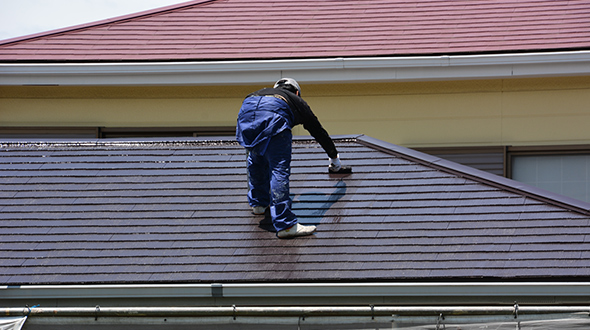
Can Roof Shingles Be Painted?

Many property owners wonder whether painting their roof is a viable way to refresh its appearance without the expense of a full replacement....