Tuesday, October 22, 2019

3 Commercial Roof Water Drainage Systems

Commercial roofing pooling rainwater

Prevent your flat roof system from collapsing under the weight of standing rainwater. Without sufficient drainage, water can build up on your commercial roof and cause catastrophic losses when the roof succumbs.

atlantacommercialroofingcontractors.com gathered information on three roof water drainage systems and how they remove potentially thousands of pounds of water from your commercial flat roofing system.

Roof Drain Types

Whether you are installing a new roof or performing renovations on an old roof, the drainage system must be considered and able to usher water off of the roof with ease. The following are three principal flat roof drainage systems:

Inner Drains – These drains are commonly found on large building roofs near the center of the building. Inner drains provide the following benefits:

• Attached to a system of pipes that drain water through the roof, water is kept from the foundation and walls.
• Since the building and walls naturally protect inner drains, there is no concern for their freezing, cracking, or failing during the winter months.
• Inner drain strainers help keep debris from clogging the drain pipes and can be custom-made to fit your roof and regional climate.
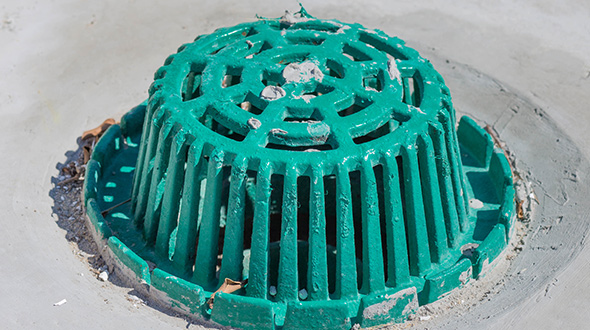
Commercial roofing internal  drainage systems metal drain strainer

Some essential issues to take into consideration are:

• A small amount of debris can render the strainers ineffective, clog the system, and cause water to pool on your roof.
• Verify the appropriate number of drains for the size of your roof. Too few drains and the system could easily be overloaded, causing water to back up and pool on your roof.
• Inner drains are more expensive to maintain. These drains require a specialized technician to service, clean, and maintain them.
• Of the three drain systems presented here, inner drains are the most expensive to install.

Rain Gutters – With the ability to serve all types of roofing systems, rain gutters together with downspouts are the most common type of water drainage system in use. Gutters offer the following benefits:

• The system is inexpensive
• Easy to install
• Effectively controls the flow of watershed from a roofing system
• Shields doorways, vents, and windows
• Keeps water from pooling near the building
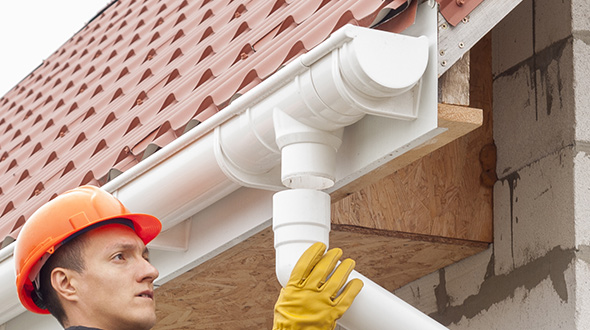
Commercial roofing rain gutter drainage system

Some essential issues to take into consideration are:

• Gutters require maintenance and cleaning year-round
• Gutters are prone to becoming brittle and cracking
• Gutter brackets may come loose or give way under excessive water or leaf weight
• In winter, ice dams can cause cracking
• Downspouts may clog causing water to back up and overflow in the gutter

Scuppers – This drainage system consists of along the outer walls (curbs) along the roofline. Water passes through a metal box that surrounds and protects the scupper. Consider the following benefits:

• Installation of the drainage system is extremely low cost
• If designed wide enough, there is virtually no clogging
• Water is propelled away from the building
• Custom scuppers can add to the building’s architectural appeal
• This draining system is almost maintenance-free

When the design and installation of scuppers are carried out correctly, the system provides the best value of the different drainage systems. Thus, scuppers are preferred for the efficient draining of water from your flat roof system.

The only issue with scuppers is when they are attached to downspouts or gutters, which may clog – scuppers function best when unattached from other systems.
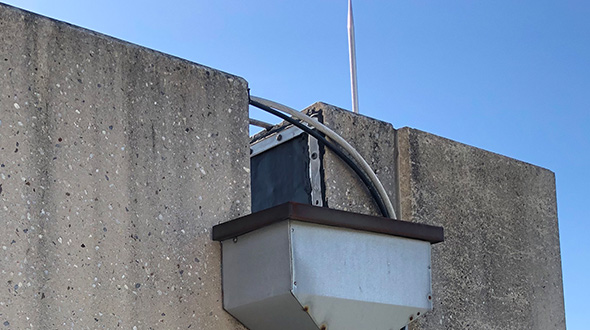
Commercial roofing rainwater drainage scupper system

Roof Load and Water Weight

Water removal from your roofing system is of supreme importance. As water pools and rises, it adds weight to your roof’s load and can cause a catastrophic roofing system failure.

A gallon of water weighs 8.34 pounds. During a rainstorm that drops a half-inch of rain, 300 gallons of water can accumulate on a 1,000 square foot roof. That is an additional 2,502 pounds added to your roof’s load.

To calculate rainfall accumulation or runoff, use the following equation:

1) Convert the footprint of your roof to inches. A 50’ by 50’ roof would be 600” by 600.”

2) Multiply the square footage of the roof (600” X 600” = 360,000”) by the number of inches of rainfall .5” for this example which equals 180,000

3) Divide the number by 231 to get the number of gallons (231 cubic inches = 1 gallon). In this case, 180,000 divided by 231 equals 779.22

4) 780 gallons of water weighs about 6,500 pounds, potentially added to your roof.

In this example, we see the potential for a roofing system partial or total failure due to an exceeded load capacity. To learn more about commercial roof loads, read atlantacommercialroofingcontractors.com/what-is-commercial-roof-load-why-you-need-to-know/

Commercial Roof Drainage Systems

In this article, you discovered information about three types of water drainage systems for commercial roofs and the impact that pooling water can have on your roof load.

By installing a drainage system that facilitates water runoff from your roof, you are extending the life of your roof and making the building a safer place to be.

If you fail to provide adequate drainage or regular maintenance to keep your systems working properly, the structural integrity of the roof, building, and its occupants are at risk.

Sources:
http://www.ashireporter.org/HomeInspection/Articles/Flat-Roof-Drainage/2554
citeseerx.ist.psu.edu/viewdoc/download?doi=10.1.1.359.7775&rep=rep1&type=pdf
digitalcommons.calpoly.edu/cgi/viewcontent.cgi?referer=&httpsredir=1&article=1069&context=aen_fac
sciencenotes.org/much-gallon-water-weigh-easy-calculation/

The post 3 Commercial Roof Water Drainage Systems appeared first on atlantacommercialroofingcontractors.com

Wednesday, September 25, 2019

Pros and Cons for 3 Types of Commercial Roofing Systems

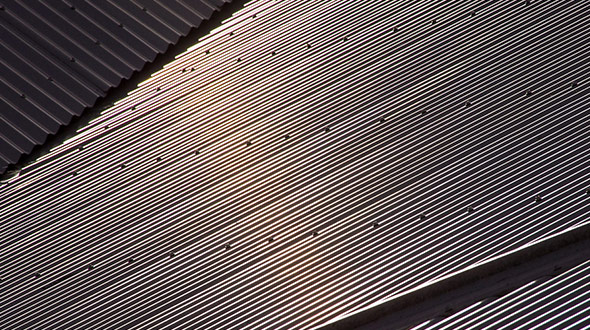
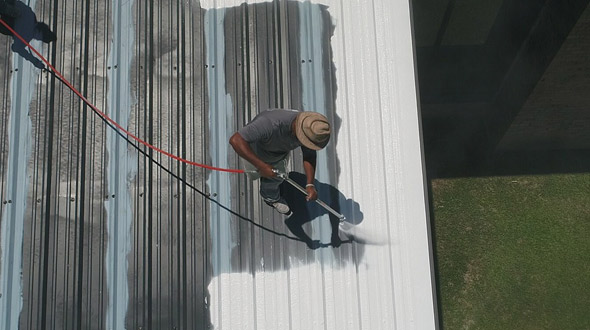
Metal roofing installation for Commercial building

Avoid investing your money in the wrong roofing system. Each roofing system has advantages and disadvantages you should be aware of before making this capital investment.

atlantacommercialroofingcontractors.com gathered detailed information about three of the common commercial roofing systems, and their benefits and disadvantages.

Metal Roofing System Pros and Cons

Metal roofing systems are built to last, and depending on your region and property type, could be the only roofing system your commercial building may ever need. Here are some of the pros and cons to consider before committing to a metal roof.

Metal roofing system pros:

Longevity – Correctly installed and maintained, metal roofing can last as long as the building it covers (70 years or more).

Weather Resistant – Metal roofing It is highly resistant to rainwater, rot, mold, mildew, and can withstand immense pressure from accumulated snowfall.

Product Warranty – While warranties may vary, some companies will cover a metal roof installation for up to 50 years.

Fire Resistant – Metal roofing materials are noncombustible and resist fire.

Metal commercial roofing system

Some metal roofing cons include:

Cost – Probably the most significant disadvantage, a metal roofing system can cost anywhere from $900 – $1,200 per 100 sq. feet.*

When the durability and longevity of metal roofing are factored in, the investment is more than justified. As previously stated, a properly installed and maintained metal roofing system can last as long as the structure below it.

Denting – When the necessity arises to service chimneys, satellite dishes, HVAC units, or generators, the serviceman or technician may dent your roof.

Likewise, if the gauge (thickness) of the roofing is too low in a region prone to hail storms, severe denting can occur during violent hail storms.

Noise – Metal roofing systems without sufficient insulation can get loud during rain or hail storms.

If you’re leaning towards a metal roof, read Metal Roofing Advantages and Disadvantages for a more in-depth article.

Built-Up Roofing System Pros and Cons

For more than a century, built-up roofing (BUR) systems have been a popular choice in the U.S. for commercial roofing systems.

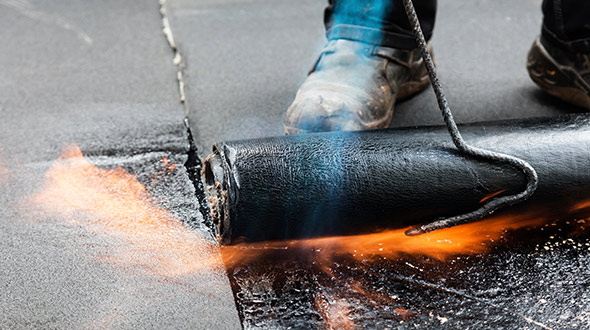
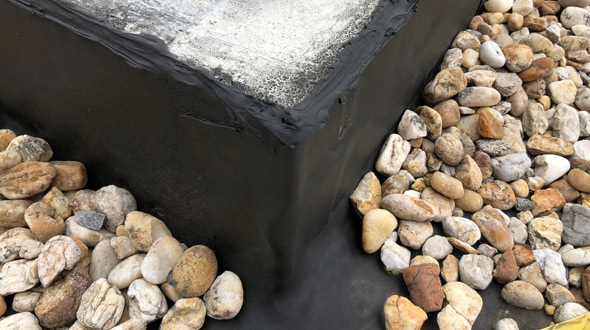
This system is comprised of alternating layers of tar or asphalt and support materials layered on the roof, with the final one consisting of stone or gravel.

Built-up roofing system pros:

Longevity – A BUR system can last 30 to 40 years when properly installed and maintained.

Waterproof – There are no joints or seams; the roofing system is one continuous surface.

Low-Maintenance – After installation, minimal attention and servicing are required, as BUR systems are installed in large sheets with a low profile as compared to other roofing systems.

Cost – Installation and material costs can range between $500 to $800 per 100 sq. feet* or more depending on the number of layers and materials you choose.

UV Protection – BUR systems provide excellent ultra-violet protection, which reduces roof temperatures and prevents extreme temperature fluctuations within the building. UV protection also prevents the drying out and break down of roofing system materials.

Commercial roofing BUR built up roof

Some built-up roofing cons include:

Safety – During installation, hazardous fumes and vapors are present.

Weight – BUR systems add significant weight to a building’s structure.

Learn more about commercial roof load-bearing capacity by reading atlantacommercialroofingcontractors.com/what-is-commercial-roof-load-why-you-need-to-know/

TPO Roofing System Pros and Cons

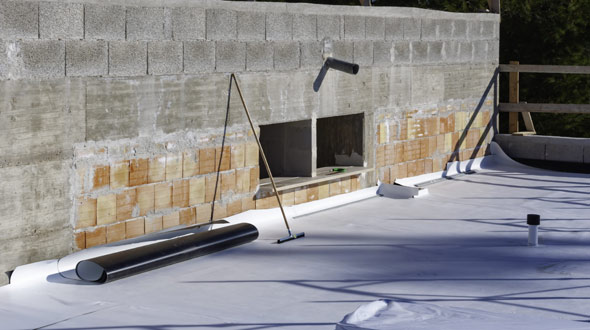
Thermoplastic Polyolefin (TPO) is a single-ply roofing system fully adhered and mechanically attached or ballasted to a roof.

TPO roofing system pros:

Longevity – TPO roofing has a (current) life expectancy of about 30 years. However, this roofing system has only been available for 30 years, and with significant improvements over the decades, TPO may last much longer.

Wind Resistant – When properly installed, TPO roofing systems receive high wind ratings.

Installation – TPO roofing system installation, when completed by an experienced roofing company, is fast, clean, and practically nonintrusive.

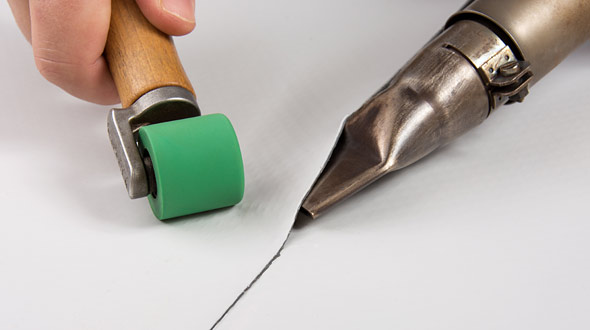
TPO roofing system proper seam welding technique

TPO roofing cons include:

Pooling Water – When the roof slope is too low, water may pool and cause an acceleration of the material’s degradation.

Cost – Installation and material costs can range between $600 to $1,400 per 100 sq. feet* or more depending on tear-off costs and selected materials.

Seam Separation – Poor seam welding can result in seam separation, allowing water into the structure.

Read more about TPO roofing systems at atlantacommercialroofingcontractors.com/tpo-roofing-system-explained/

Commercial Roofing Types

Before committing thousands of dollars for a new roof, take the time to familiarize yourself with different types of available roofing systems for your building.

In this article, you discovered information about 3 commercial roofing system options, their durability, price ranges, and other essential pros and cons.

Avoid making a poor decision when selecting a roofing system for your commercial building. Learn as much as you can about available commercial roofing systems in your area, and your local roofers,

*Costs related to roofing materials, tear-offs, and installations mentioned in this article are approximations NOT QUOTES. Visit atlantacommercialroofingcontractors.com for further information.

Sources:
everybodyneedsaroof.com/thermoplastic-membranes
asphaltroofing.org/bur-multi-ply-built-up-roofing/
cchrc.org/sites/default/files/docs/metal_roofing.pdf

The post Pros and Cons for 3 Types of Commercial Roofing Systems appeared first on atlantacommercialroofingcontractors.com

Thursday, August 29, 2019

What is Your Commercial Roof Load and Why You Need to Know

Commercial flat roof at dead load capacity

Is your roof about to give way with too much dead load? Before hauling up new equipment to your commercial roof, you need to know if you will exceed its capacity and potentially cause a catastrophic collapse.

atlantacommercialroofingcontractors.com gathered information on the different types of loads your commercial roof endures and how they factor into your roof’s weight-bearing capacity.

Roof Load Calculations

Calculating weight loads is one of the most critical aspects of engineering a roof. Even minor calculation errors can lead to catastrophic roof support failure, injuries, and death.

Since no two roofs are the same, there is no single formula that guarantees the right outcome every time. However, there are common considerations when calculating a roof load during building construction:

• Buildings must be constructed so that columns, beams, walls, and everything structural can support the weight of a roof, and everything on it.

Commercial building and roof construction

• Location of the building. Different regions of the U.S. may require greater roof loads to accommodate higher windspeed or more substantial snowfall.

• Building owners tend to want to keep costs down during construction. This requires engineers to be even more meticulous in their calculations as they are confronted with budgetary and material confinements.

• The struggle between frugal building owners and construction engineers often leads to an extremely narrow margin of error when calculating a roof’s total load. Missteps in calculations could lead to the roof or building failure.

The “total load” of a roof is the combination of the dead load, live load, and transient load.

Types of Loads Your Commercial Roof Supports

When calculating your commercial flat roof’s weight-bearing capacity, three principal types of loads that must be calculated:

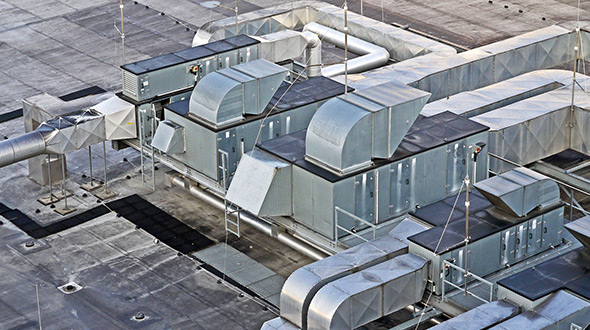
Dead Load – This load includes the combined weight of individual roof materials and anything secured to it permanently. This consists of any ceiling material supported under the roof and permanent installations, like HVAC ducts.

Flat metal commercial roof dead load

Live Load – This load is determined by adding the weight of installers, technicians, and repairmen who may work on the roof, along with the combined weight of the tools and equipment they might use.

Transient Load – This includes all of the natural stressors on a roof, including rain load, uplift (wind) load, and snow load.

Transient loads vary widely based on conditions and regions. For example, snow loads vary based on moisture and volume, while uplift loads are determined by wind speed.

The International Code Council (ICC) discusses required roof loads for structures and addresses dead loads, live loads, and transient loads – as regulated by the international building code at codes.iccsafe.org/content/IBC2012/chapter-16-structural-design

What is the Total Load for Your Commercial Roof?

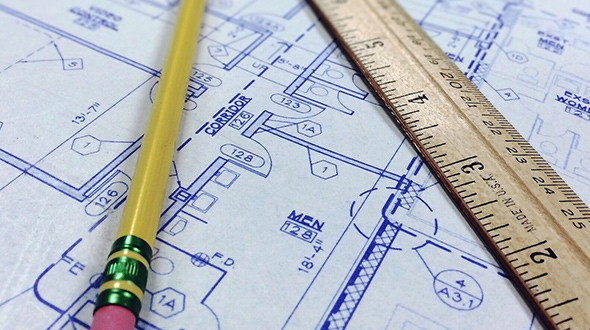
The total load for your building and its roof are already calculated for you and can be found detailed on your original construction blueprints. Improvements, upgrades, and additions to the roof or the equipment added on it after construction should be factored into the total load calculation.

Commercial roof load capacity found on original building blueprints

Before initiating any equipment repair, replacement, or additions, have your building engineer factor in the total weight of all people, tools, machinery, and equipment to determine the proper weight distribution and the safety of those activities.

Ultimately, calculating the total roof load is basic physics. However, unless all potential factors are included in the formula, there is great potential for catastrophic roof failure.

When installing a new roof, or replacing an old one, always adhere to your municipality’s building codes to meet those minimum specifications. Then, it’s up to the building owner and engineer to determine the present and future needs for the building and the roof’s total load.

What are the Strongest Roofing Materials?

Building owners experiencing roof failure due to a tornado, hurricane, snow, or equipment exceeding the roof’s total load, may want to install a stronger roofing system. Stronger often means heavier, and before making your decision, you should be sure that your building can structurally support the new roof.

Sprayed Polyurethane Foam (SPF) – Among the most durable roofing material available when weight is considered. SPF may be your best option for a roofing system with a high total load.

Concrete – There’s no question about the strength of a concrete roofing system. However, the weight added to the building may cause more stress to the building than the load above the concrete.

Metal – Metal roofing systems are sturdy and resilient, with a high total load capacity without the weight of a concrete roofing system. Visit atlantacommercialroofingcontractors.com/metal-roofing-advantages-disadvantages/ to learn more advantages and disadvantages of the metal roofing system.

Commercial metal roof live transient and dead load

Whether repairing or replacing your roofing system, you must factor in the building’s structural load and avoid exceeding it. Together with your building engineer and commercial roofer, you can find a way to increase your roof’s total load without exceeding your building’s capacity.

Commercial Roof Load Bearing Capacity

Like your building, your roof has a load capacity. Roof failure can occur from extreme weather events, overloading the building’s structural capacity, or by exceeding the roof’s total load capacity.

In this article, you discovered the different types of loads your commercial roof must endure, what a total load is, and which roofing materials are the strongest.

When considering roof repairs, upgrades, extensions, or replacement, you must take into consideration the weight this may add to your roof and whether or not it can handle the load.

Sources:
https://www.nrc.gov/docs/ML1214/ML12146A122.pdf
https://law.resource.org/pub/bd/bnbc.2012/gov.bd.bnbc.2012.06.02.pdf

The post What is Your Commercial Roof Load and Why You Need to Know appeared first on atlantacommercialroofingcontractors.com

Friday, July 26, 2019

Commercial Roof Storm Damage and Insurance Claims

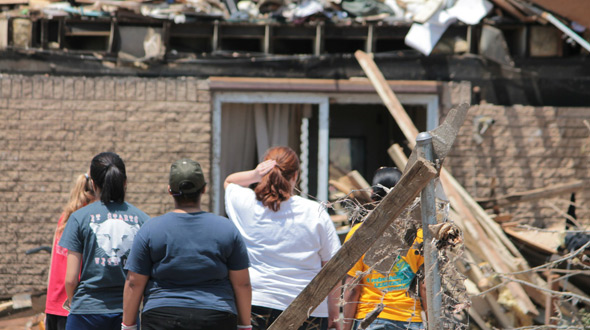
Insurance claim for tornado damage to commercial roofing system

Is your commercial roof damaged and leaking from storm damage? When the time comes for the insurance company to pay for repairs, know how storms damage commercial roofing to ensure you are getting your maximum payout.

atlantacommercialroofingcontractors.com gathered information on damages caused by different weather events and how to stop your insurance company from underpaying your claim.

Storms and Commercial Roof Damage

Depending on the severity and duration of a storm, the extent of damages to your commercial roof may vary. The following are types of storms that can cause catastrophic losses:

Roof Damage from Rain Storms

Heavy rainstorms put a roof to the test, exposing its vulnerabilities and flaws. During a rainstorm, be on the lookout for:

• Leaks in the corners of the structure.
• Water coming through vents, skylights, and other roof penetrations.
• Wet spots in the ceiling.

If there is a problem with the roof’s drainage, water may pool on the roof, adding weight to the roofing system and accelerating deterioration of roofing materials, leading to the failure of the roofing system.

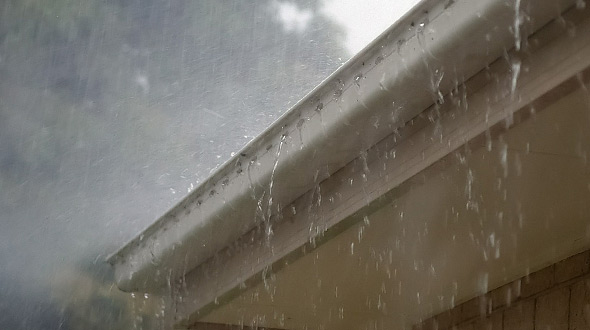
Rain gutters and commercial roofing system damaged in severe weather

Roof Damage from Wind Storms

Wind storms are capable of causing both hidden and visible damage to your roofing system, such as:

• Lift (This is suction created as wind blows over your roof).
• Blowing equipment over, breaking, puncturing, or tearing portions of the roofing material.
• Blowing damaging debris onto and across the roof.
• Causing overhanging trees to scrape or fall onto the roof.

The majority of wind damage doesn’t become evident until the next rainfall, when water leaks through the roofing system.

Roof Damage from Hail Storms

Hail storms are fast, violent, and accompanied by high wind. They can cause significant damage to roofing systems, structures, vegetation, vehicles, or anything left unsheltered. After a hail storm has passed look for the following:

• Pockmarks, dents, and cracks along seams, fastening points, and flashing.
• Damage to gutters and downspouts. Large cracks or dents can compromise their function.
• Damage to equipment mounts and roof penetrations.
• Fallen trees, branches, and other debris potentially cracking, puncturing, or tearing roofing material.
• Significant accumulations of hail adding weight to the roofing system.

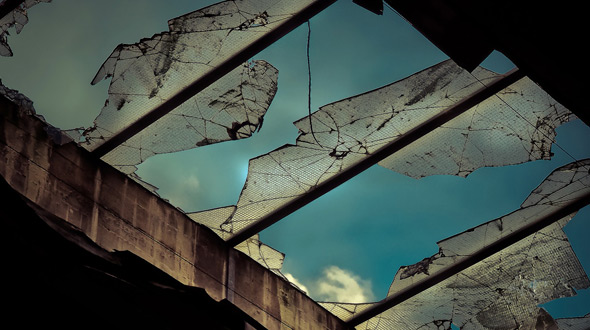
Commercial roofing system insurance claim damaged by hail storm

Pea-sized or marble-sized hail may not cause any obvious damage. Sizes reaching that of a dime or a quarter can cause significant damage. However, when the size of the hail reaches that of a golf ball or a softball, catastrophic damages are likely to occur.

Roof Damage from Tornadoes

The concentrated winds and updraft of a tornado are capable of turning any, and everything unanchored into a lethal projectile. Rated on the Enhanced Fujita (EF) scale from 0 to 5, tornadoes may cause the following damages:

• Partial or complete removal of a roofing system.
• Lift and damage to membrane seals and flashing.
• Gutters and downspouts ripped away.
• Equipment unanchored and dragged across the roof.
• Projectiles (trees, road signs, vehicles, etc.) thrust onto the roof.
• Partial or total destruction of the building.

To learn more about the Enhanced Fujita scale, visit spc.noaa.gov/efscale/

Roof Damage from Hurricanes

Potentially the most damaging of storms are hurricanes. They pack the winds of tornadoes with the destructive force of the heaviest of rain storms.

• Partial or complete removal of a roofing system with catastrophic flooding as a result.
• Lift and damage to membrane seals and flashing.
• Gutters and downspouts overloaded and potentially ripped away.
• Wind-driven rain can be forced beneath roofing material and flashings causing interior damage and leaks without damaging the roof covering.
• Projectiles can be thrust onto the roof.
• Blockages in the draining system may cause water to accumulate, overloading the roof weight capacity, and collapsing it.

Hurricanes are ranked from Category 1, with winds of 74-95 mph, to Category 5, with winds of 157 mph or more. Category 5 hurricanes are capable of severely damaging a city’s entire infrastructure, making areas uninhabitable for weeks or even months.

Insurance claim for storm damage to commercial roofing system

Visit the Storm Prediction Center, as preemptive action and awareness of hurricanes, tornadoes, and storms can help protect and prepare your property for violent weather damage.

Roof Damage from Extreme Heat Waves

Heat waves can cause a particular type of roof damage. Extreme or prolonged periods of heat can cause roofing material to expand, and as temperatures cool at night, the expanded materials contract. As this process of expansion and contraction repeats, the following damages may occur:

• Cracking or loss of flashing seal
• Opening of seams or welds
• Tearing, shrinking, or pulling apart of roofing membranes

While all roofing systems are vulnerable to shrinkage, TPO, EPDM, and some PVC membrane systems are particularly susceptible and suffer more significant heat-related damages.

Learn more about this and “5 Must Know Commercial Roofing Problems and Solutions”
at atlantacommercialroofingcontractors.com/5-must-know-commercial-roofing-problems-solutions/

Insurance Claims after Storm Damage

After a storm has passed and damages are detected, it’s time to act. The longer you wait to file a claim, the more you risk having your claim underpaid or denied.

The following will help you file an insurance claim for a storm-damaged commercial roof:

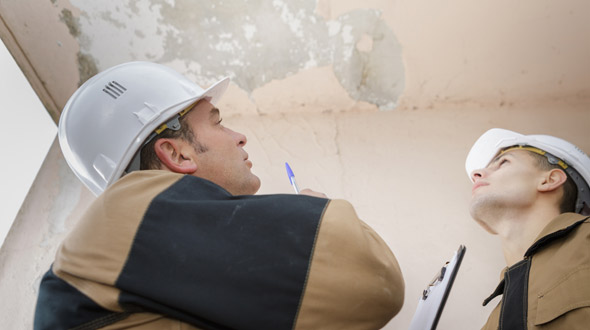
Documentation of the damage – Hire a professional roofing contractor to perform a roofing system inspection, and document every aspect of the damage with photos, video, and narrative descriptions.

Filing the claim – Once the inspection is complete, the roofer who performed the inspection can help you assemble the claim and submit it. This part of the process is straightforward and can usually be completed on your insurer’s website or by contacting a claims representative.

Inspection by the insurer’s adjuster – your insurer will send their own adjuster to evaluate the damage. When possible, invite your roofer to the inspection site to advocate and represent your interest to the insurance adjuster.

Approval, refusal, and negotiations – if the insurance company’s adjuster approves your claim, you will receive damage compensation. If refused or only partially approved, your roofer or a public insurance adjuster can help you negotiate better terms before reaching a final settlement.

Commercial Roof Repair after Storm Damage

Knowing how storms damage a roof can help you file your claim and recover the money necessary to restore your property correctly.

In this article, you discovered how different severe weather events can damage a roofing system, the process for filing an insurance claim, and how to prevent your insurance company from underpaying your claim.

If your commercial roofing system is leaking after a storm, identify all potential damages, and promptly file your claim to ensure the proper repair and settlement is achieved.

Sources:
https://www.spc.noaa.gov/efscale/
https://www.weather.gov/mfl/saffirsimpson
http://citeseerx.ist.psu.edu/viewdoc/download?doi=10.1.1.558.184&rep=rep1&type=pdf

The post Commercial Roof Storm Damage and Insurance Claims appeared first on atlantacommercialroofingcontractors.com

Wednesday, June 26, 2019

3 Leaky Roof Causes and Solutions

Leaky commercial roof inspection and evaluation

The materials, and equipment found on a commercial roof are susceptible to the elements, leaks and costly damage. Taking measures to fix and prevent that damage, can save a ton of money and dramatically extend the life of your commercial roofing system.

atlantacommercialroofingcontractors.com gathered information about 3 common commercial roof leak causes, solutions, and how to prevent them altogether.

Commercial Roofing Penetration and Leaks

Industry-wide, the most common roofing complaints are for leaking roofing systems. Commercial roof penetrations are often the culprit and may include vent pipes, drains, wiring connections, or any related equipment that creates an opening or hole in the roofing system.

Commercial roof vent penetration with flashing

Cause – Leaks generally occur around the penetration or joint, and when its waterproofing (flashing, pitch pans, etc.) are poorly or improperly installed. However, severe weather events and nuisance wildlife can compromise the integrity of the installation.

Pitch pan and flashing on a commercial roof

Solution – After discovering which penetration is causing the leak, one of the following should be repaired or replaced:

• Flashing – The waterproof layer of material keeping water from leaking through joints, vents, or appliance connection points. Read more about Types and Purpose of Commercial Roof Flashing at atlantacommercialroofingcontractors.com/types-purpose-flashing/
• Pitch Pans – Used as sealants around rooftop penetrations and pipes exiting through a roof.

Depending on the roofing system, the combination of a pitch pan and flashing may be necessary to seal the penetration.

Make sure to verify that the object penetrating the roofing system is firmly held in place. The slightest vibration or movement over time will cancel out even the best waterproofing, allowing water into your property.

Poor Commercial Roofing System Installation (Bad Contractor)

If your roofing system was poorly installed, you can expect to experience everything from minor/major leaks, and partial or complete failure if your contractor neglected quality control checks, manufacturers guidelines, or necessary procedures.

Cause – Poor commercial roofing installations are generally the result of inexperienced, unqualified, or negligent contractors who cut corners, rush through installations, and neglect manufacturers and general safety guidelines.

Commercial roof structure and installation

Solution – Use strict guidelines when vetting roofing contractors to repair or replace a roofing system. To qualify a roofing company, do the following:

• Check the company’s references.
• Visit locations of their previous installations.
• Read through their online reviews.
• Search for complaints and resolutions through the Better Business Bureau at bbb.org.
• Verify the company’s license to operate in your city.
• Request proof of insurance coverage.
• (Once contracted) Request copies of all permits attained to allow the lawful repair or replacement of your roofing system.
• Request information about their warranty policy.

Reputable roofing contractors will make all of this readily available for your review.

If you suspect that your roof was poorly installed, have it inspected and thoroughly documented to hold the roofing company accountable for the repair or replacement of their faulty work.

You can learn more about common Mistakes that Most Roofers Won’t Tell You by visiting atlantacommercialroofingcontractors.com/15-mistakes-roofers-wont-tell-you/

Commercial Roofing System Scrapes, Punctures, and Holes

TPO, EPDM, and PVC membrane systems are vulnerable to being scraped, punctured, and developing holes that go unnoticed until severe damage has occurred.

Commercial roof membrane system repair and replacement

Cause – The causes for scrapes, punctures, and holes in your roofing system may include:

• Storm Debris
• Foot Traffic
• Equipment Maintenance, Repair, and Replacement
• Wildlife
• Poor Roof Installation
• Defective Material
• Inferior Quality Repairs or Patchwork

Over time, this type of damage can lead to rotting or destabilizing your roofing system’s support structure. This can result in catastrophic loss if it leads to a complete roofing system failure.

Solution – The following measures will help prevent scrapes, punctures, and holes from causing significant damages to your building:

• Install raised walkways, rooftop pavers, or walk pads from roof access points to machinery and equipment.
• Have pathways reinforced where walkways are not possible.
• Schedule thorough inspections after equipment maintenance, severe weather events, or the discovery of wildlife activity.
• Restrict roof access to maintenance and technical crew members.
• Have the roof inspected annually for signs of shrinkage, expansion, weathering, or other signs of trouble.

If left unmanaged, this type of damage has the potential to void the manufacturers and maintenance warranties.

When having your roof repaired, the expansion and contraction of materials from temperature and weather conditions must be taken into account. In many cases, the source of a leaky roof is the poor or inadequate repair of a previous issue.

Leaky Roof Prevention

Among the best measures of leak prevention for a roofing system is not to ignore it. Routine inspections and a roof maintenance plan are far less costly than a partial or total roof replacement.

Installation of Commercial roofing system

Take immediate action when damage occurs. Problems with roofing systems don’t go away on their own, and are exacerbated when avoided or repairs are delayed.

Commercial Roof Leaks

If you don’t know how to address these common leaky roof issues, your building could be severely compromised and require extensive repairs well before its time.

In this article, you discovered 3 common leaky roof scenarios, what causes them, and how to quickly solve them.

Allowing problems with your leaking roof to persist will lead to structural damages, rot, mold, mildew, and very costly repairs. In the case of roofing systems, everything you can do to fix and prevent leaks is far less expensive than repairing structural damage to the building or having to replace your roof entirely.

Sources:
https://www.copper.org/applications/architecture/arch_dhb/arch-details/flashings_copings/roof_penetrations.html
https://www.nachi.org/roofs.htm

The post 3 Leaky Roof Causes and Solutions appeared first on atlantacommercialroofingcontractors.com

Monday, May 27, 2019

5 Must Know Commercial Roofing Problems and Solutions

Commercial roofing membrane system with flashing

Not knowing the proper solutions to these common roof issues will leave you at the mercy of a roofer, and out of a lot a money.

Commercial roofing is susceptible to the elements, harsh weather, and many forms of damage. By taking measures to fix and prevent that damage, you can dramatically extend the life of your roofing system.

atlantacommercialroofingcontractors.com gathered information about 5 common commercial roofing problems, their solutions, and how to prevent them.

#1 Commercial Roofing Problem – Leaks

Leaking roofing systems are among the most common complaints industry-wide. Until it rains, most building owners don’t even realize there’s a problem.

While each and every problem listed in this article would likely result in leaks, the principal cause of leaks is often poorly installed flashing and pitch pans.

Flashing – This is a waterproof layer of material that keeps water from leaking into your roofing system at joints, vents, or appliance connection points.

Pitch Pans – These are used as sealants around rooftop penetrations and pipes protruding through a roof, and may not be properly sealed.

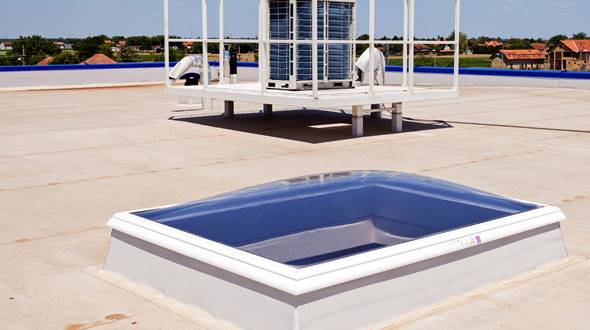
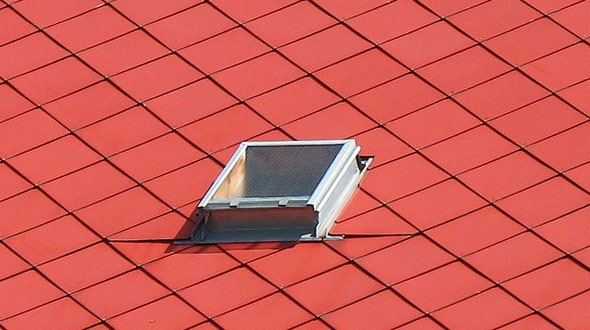
Commercial roofing system skylight pitch pan

Solution: Locate the defective flashing or pitch pan and have them repaired by your roofing maintenance provider, or reputable commercial roofing contractor.

While this problem may be an isolated occurrence, have the rest of the roof inspected for signs of embrittlement, damage, or poor installation of its flashing, seams, and pitch pans.

Read more about the types and purpose of commercial roof flashing at atlantacommercialroofingcontractors.com/types-purpose-flashing/

#2 Commercial Roofing Problem – Scrapes, Punctures, and Holes

Scrapes, punctures, and large holes can be caused by foot traffic, storm debris, and wildlife. This type of damage can go unnoticed and build up over the years, affecting the support structure of the roofing system; left untreated, this leads to rot, mold, and a potential roof system failure.

This type of damage can also result in the voiding of manufacturers and maintenance warranties.

Solution: Install raised pathways or walk pads to and from equipment, vents, or frequently visited areas of the roof. If this type of pathway is not viable, have the roofing system reinforced in these areas to accommodate the increased traffic.

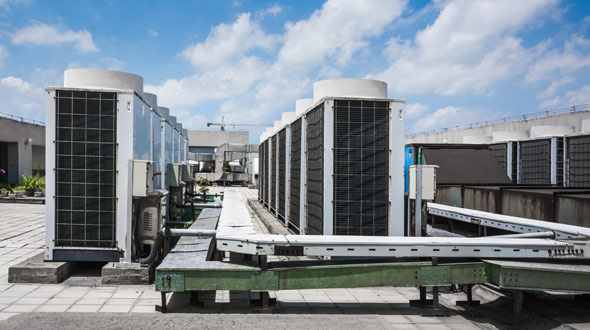
Commercial roofing system elevated walkway between air conditioning units

Have the roof inspected after any maintenance, severe storm or other activity which may lead to scrapes, punctures, and holes.

When being repaired, expansion and contraction of the roofing material and underlaying insulation must be taken into account to avoid further damage and future membrane tears.

#3 Commercial Roofing Problem – Poor Installation

The poor installation of your roofing system can lead to a myriad of problems. Everything from leaks, to complete failure is possible when your contractor neglects necessary, procedures, manufacturers guidelines, and quality control checks.

Commercial roofing membrane system installation

Solution: Do your homework. Check references, visit previous roof installations, read online reviews, and verify the company’s legal licensing and ability to work in your city.

If your roof was poorly installed, have the roof inspected and all discrepancies documented. The roofing company can then be held accountable for the correction, repair, or replacement of the faulty work.

Read about some common mistakes that most roofers won’t tell you about by visiting atlantacommercialroofingcontractors.com/15-mistakes-roofers-wont-tell-you/

#4 Commercial Roofing Problem – Shrinkage

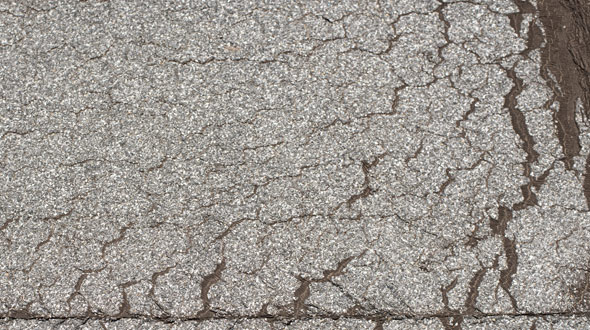
In locations where temperatures frequently soar and plunge, the material and components of your roofing system may contract and later expand. Shrinkage can cause cracking, tearing, and the pulling apart of seams, membranes, and essential elements like flashing.

While all roofing systems are susceptible to shrinkage, TPO, EPDM, and PVC membrane systems are particularly vulnerable.

Commercial roofing system with shrinkage and integrity loss

Solution: Have your roof inspected frequently to detect potential problems with shrinkage early on. Allowing this problem to persist will result in more expensive repairs, if not the replacement of the entire roof.

#5 Commercial Roofing Problem – Wind Uplift

Wind uplift can be devastating to materials and the integrity of a property. An uplift force is upward pressure applied to a structure that has the potential to raise it. Wind uplift occurs when the air pressure under a roof is greater than the air pressure above it.

When your roof is susceptible to wind uplift, there are two potential outcomes you may experience during severe weather conditions:

Partial Roof Removal – This occurs when a small portion of the roof is removed by sustained winds, and would only need to be repaired rather than replaced.

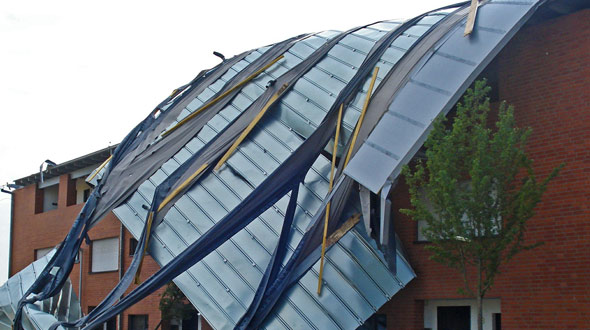
Complete Roof Removal – This outcome is usually associated with tornadoes and hurricanes. It is the near complete or complete removal of your roofing system, requiring the installation of a new roofing system.

Commercial roofing complete removal after tornado

Susceptibility to uplift is greater in roofing systems with poorly sealed seams and flashing. Another factor is the height of the building; ground wind speeds are typically much lower than those at higher altitudes.

Solution: Have a seamless or fully adhered roofing system installed. For existing systems, have all seams and flashing inspected and resealed if they show any signs of wind penetration.

Commercial Roofing Damage Prevention

The prevention of damage to your roofing system relies partly on the attention you give it. A maintenance plan and regular inspections are preemptive measures that will save you substantially.

Besides an annual inspection, a reputable contractor should be called to evaluate your roof after the following:

• Severe weather, including hail storms, tornadoes, hurricanes, and sustained high winds.
• Tree or branches falling on the roof or slamming into the building.
• Heavy debris blown onto the roof.
• Any time the structure suffers a significant jolt, including vehicle collisions and earthquakes.

If you do not possess a maintenance contract or plan for your roofing system, it is highly recommended to acquire one before your roof sustains irreversible damage.

Protect your Commercial Roofing System

You can extend the life of your roofing system and protect the significant investment it represents by taking simple measures to ensure its durability and stop minor problems from becoming major expenses.

In this article, you discovered essential information about 5 of the most common commercial roofing problems, how to solve them, and how to prevent them.

Your failure to keep a roofing maintenance contract or disregard for annual and emergency inspections could result in the failure of your roofing system, interruption of your business activities, and major financial losses that could be prevented.

Sources:
http://rci-online.org/wp-content/uploads/2014-CTS-chamberlain.pdf
https://www.nachi.org/epdm.htm

The post 5 Must Know Commercial Roofing Problems and Solutions appeared first on atlantacommercialroofingcontractors.com

Friday, April 26, 2019

Types and Purpose of Commercial Roof Flashing

Commercial roofing system weatherproof  flashing

Don’t let wet spots on your ceiling or streaks down your wall make your property look ugly and worth less money. Your leaky roof is often times the result of a failure in the roofing system’s flashing.

Without sufficient flashing, a roofing system cannot repel the elements, will ultimately fail and begin to leak. When installing a new roof or repairing a current one, it is essential that the flashing be compatible with the roofing system and be installed properly.

atlantacommercialroofingcontractors.com examines the purpose, types, and application of flashing used in commercial roofing systems.

What Is Flashing?

Flashing is a layer of waterproof material that keeps water from penetrating your roofing system at joints, vents, exhausts or appliance connection points. While caulk is used to fill small gaps around doors and windows, it has an entirely different purpose, and shouldn’t be confused with flashing.

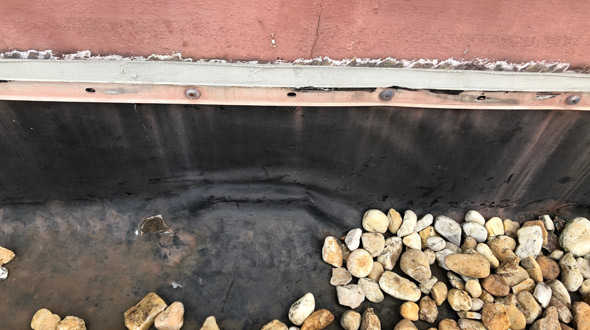
Waterproof flashing on a commercial roofing system

Water naturally runs downhill to the lowest point of gravity. For flashing to work correctly, all seams must be installed facing downhill. Properly installed, the upper edge of flashing should be covered or protected by tarpaper, TPO, or whichever membrane or material is used in the roofing system.

Flashing Material

Numerous materials can be applied as flashing. The two criteria commonly used when determining which material to use are:

1 – The material won’t degrade from being in contact with other incompatible material.

2 – The material is impermeable to water.

The following materials are commonly used as flashing in both commercial and residential roofing systems:

Plastic and Rubber – While primarily used as caulk, plastic and rubber are excellent water-repellants when applied as flashing.

Commercial roofing system caulked rubber waterproof flashing

PVC and TPO – Both PVC and TPO are popular types of roofing systems, and the same material can be used as incredibly effective and durable flashing.

Roofing Felt – Asphalt-saturated roofing felt can be used as flashing, but is not as durable as other options.

Aluminum – Durable, easy to form, and somewhat inexpensive. When left in contact with alkaline material like concrete, or treated lumber, aluminum flashing will corrode.

Galvanized Steel – Not as durable as other options, but it is very inexpensive.

Copper and Lead-Coated Copper – More difficult to bend and form than aluminum, but much more durable. Copper flashing is typically used during the installation of solar panel piping, wiring and sensor connections.

Lead – Because of its super-flexibility and durability, lead is a popular choice in the roofing industry (a favorite of masons for chimney flashing). There are potential health risks, but the use of lead flashing continues, and when properly installed can last for up to 200 years.

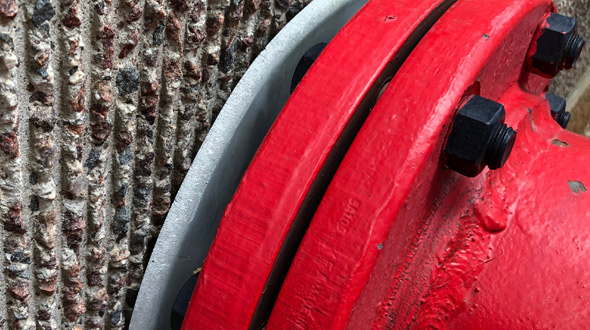
While most flashing is sold in rolls that vary in thicknesses and can be cut, bent, and shaped at the job site. Pre-molded flashings are also available for standard-sized exhaust pipes, vents, and fittings.

Commercial roofing pre molded flashing for water main entry

Flashing Types for Roofing Systems

The following are the names and descriptions of different types of flashing used in commercial and residential roofing systems:

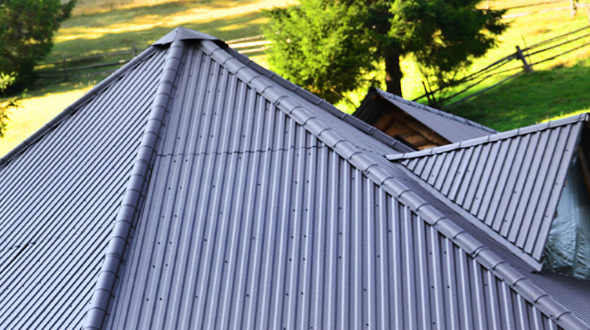
Ridge Flashing – This flashing is applied at the “peak” of a dually sloped roof.

Commercial roofing system ridge flashing

Bargeboard – This is the flashing along sloped roof edges.

Wall Abutment – This is where roof edges meet walls.

Corner Flashing – This flashing is used where walls meet, and it runs from roof to floor.

Inverted Corner Flashing – This flashing is used when the corner of a structure meets a wall. Instead of wrapping around the corner as in “corner flashing,” it is applied to the structure and the wall in an “inverted corner” from roof to floor.

Eaves Flashing – This flashing runs along the length of flat edges of a roofing system.

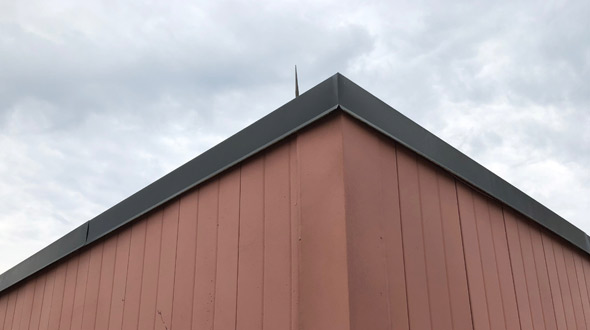
Commercial roofing system metal eaves flashing

Drip Cill Flashing – This is the flashing which runs along the lower perimeter (at the foundation).

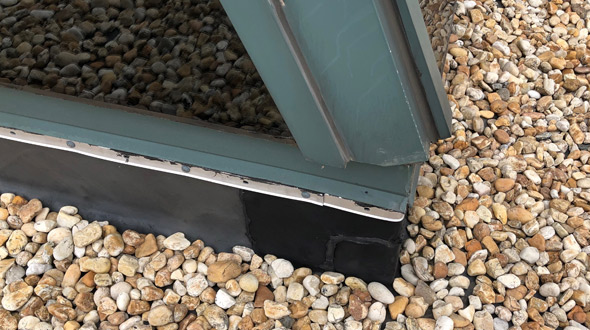
Commercial roofing system pvc drip cill flashing

Valley Flashing – The point where two downward slopes meet is where valley flashing is applied.

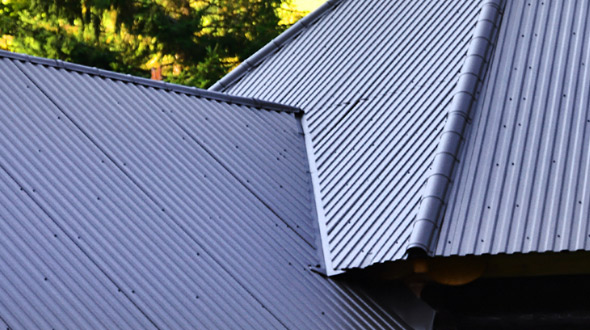
Commercial roofing system valley flashing

Step Flashing – Commonly used in place of wall abutments or chimney and skylight flashing (on slopes), step flashing is the downward overlapping alternate layering of roofing and flashing material.

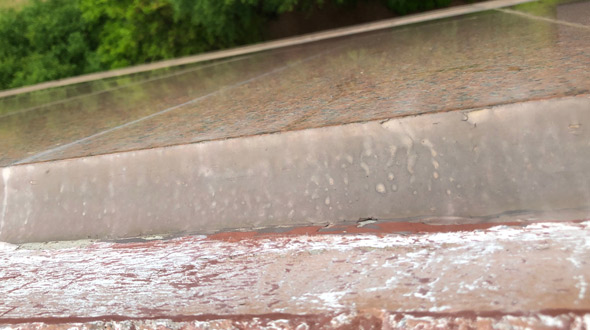
Metal Edge Flashing – Also known as “drip edge flashing,” this is installed around the perimeter of a roofing system to direct the flow of water off of it without entering the structure . To learn more about commercial edge flashing and coping visit disastersafety.org/ibhs/commercial-roofs-flashing-coping/

Saddle Flashing – This is the flashing used where joists meet walls or other support structures, wrapping around connection points to form a water-tight seal.

Vent Pipe/Exhaust Flashing – This flashing provides a water-tight seal at the point where vent or exhaust pipes protrude through a roof.

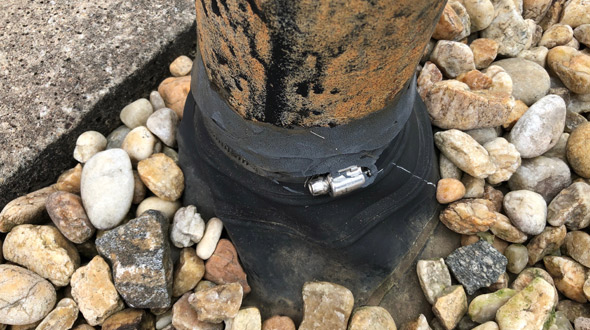
Commercial roofing system vent pipe and exhaust flashing

Cap Flashing – This flashing is usually composed of metal and is used to shield the upper edges of membrane base flashing along the top of a wall or column.

As you can see, flashing is a critical element in a roofing system. There are a few more essential components that comprise a complete roofing system. To learn these, and for more commercial roofing information and tips, visit atlantacommercialroofingcontractors.com/info/

Roof Flashing Weatherproofs Your Structure

Don’t let your building unnecessarily look run-down and develop water damage from preventable water infiltration and leaks. Keeping the elements outside is what a successful roofing system does, and it dramatically relies on properly applied flashing.

In this article, you discovered what roofing system flashing is, what it is used for, the different types, and its application.

The use of the wrong flashing material on a roofing system may lead to leaks and its ultimate failure. Save money and avoid unexpected interruptions of your business by having the appropriate flashing material properly installed in your commercial roofing system.

Sources:
http://web.mit.edu/parmstr/Public/NRCan/CanBldgDigests/cbd069_e.html
https://www.nachi.org/flashing-part1-12.htm

The post Types and Purpose of Commercial Roof Flashing appeared first on atlantacommercialroofingcontractors.com

Can Roof Shingles Be Painted?

Many property owners wonder whether painting their roof is a viable way to refresh its appearance without the expense of a full replacement....